Probing the first billion years

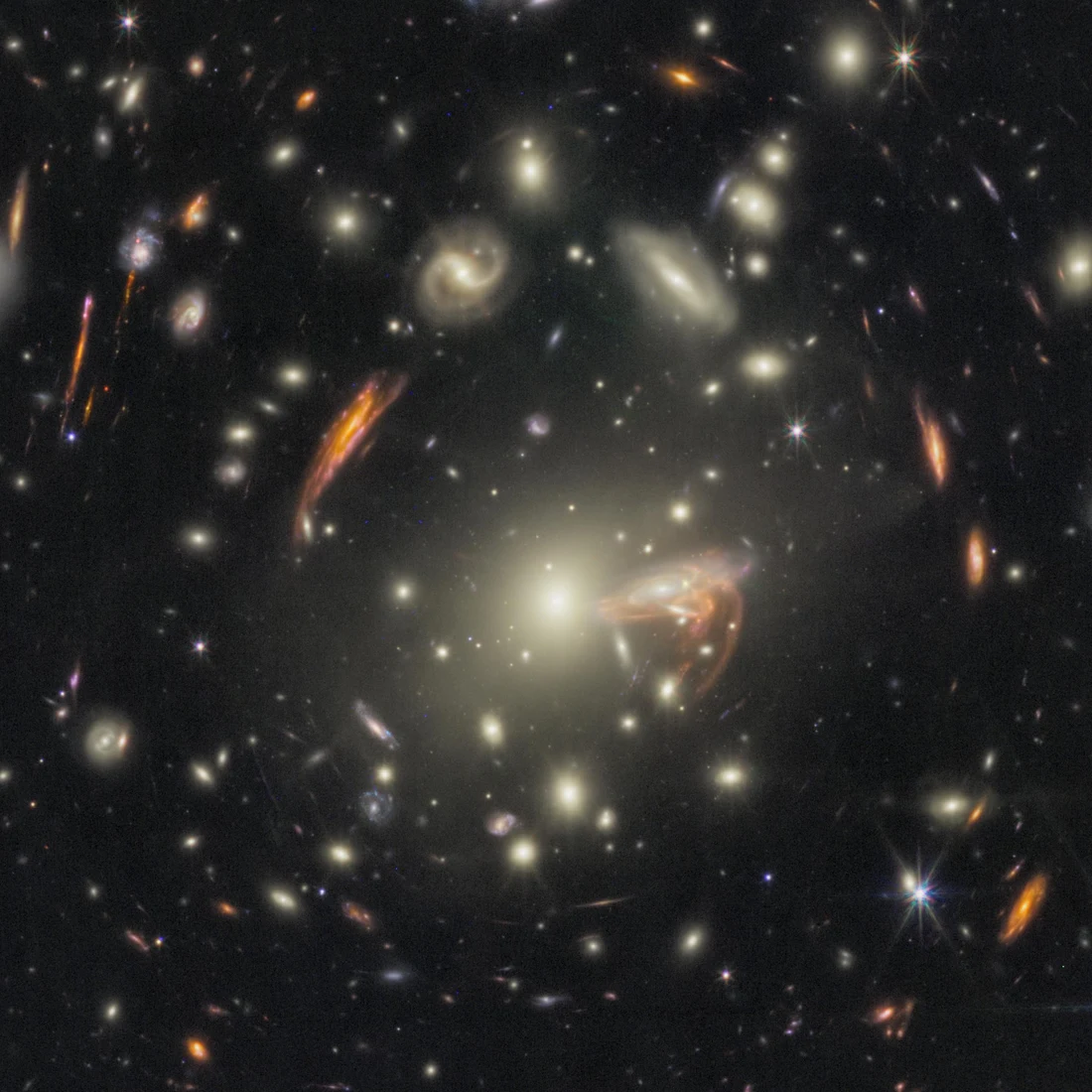
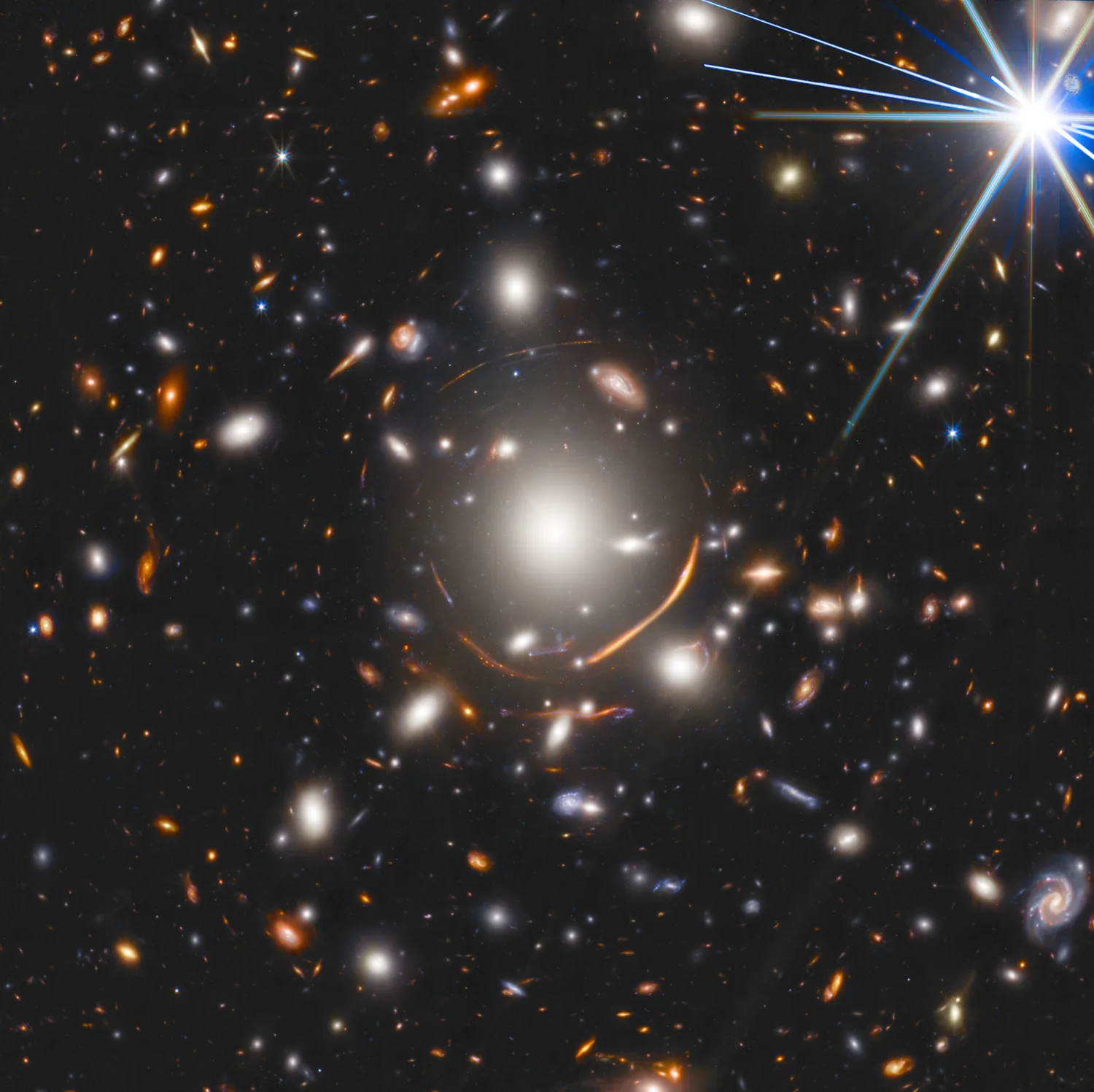
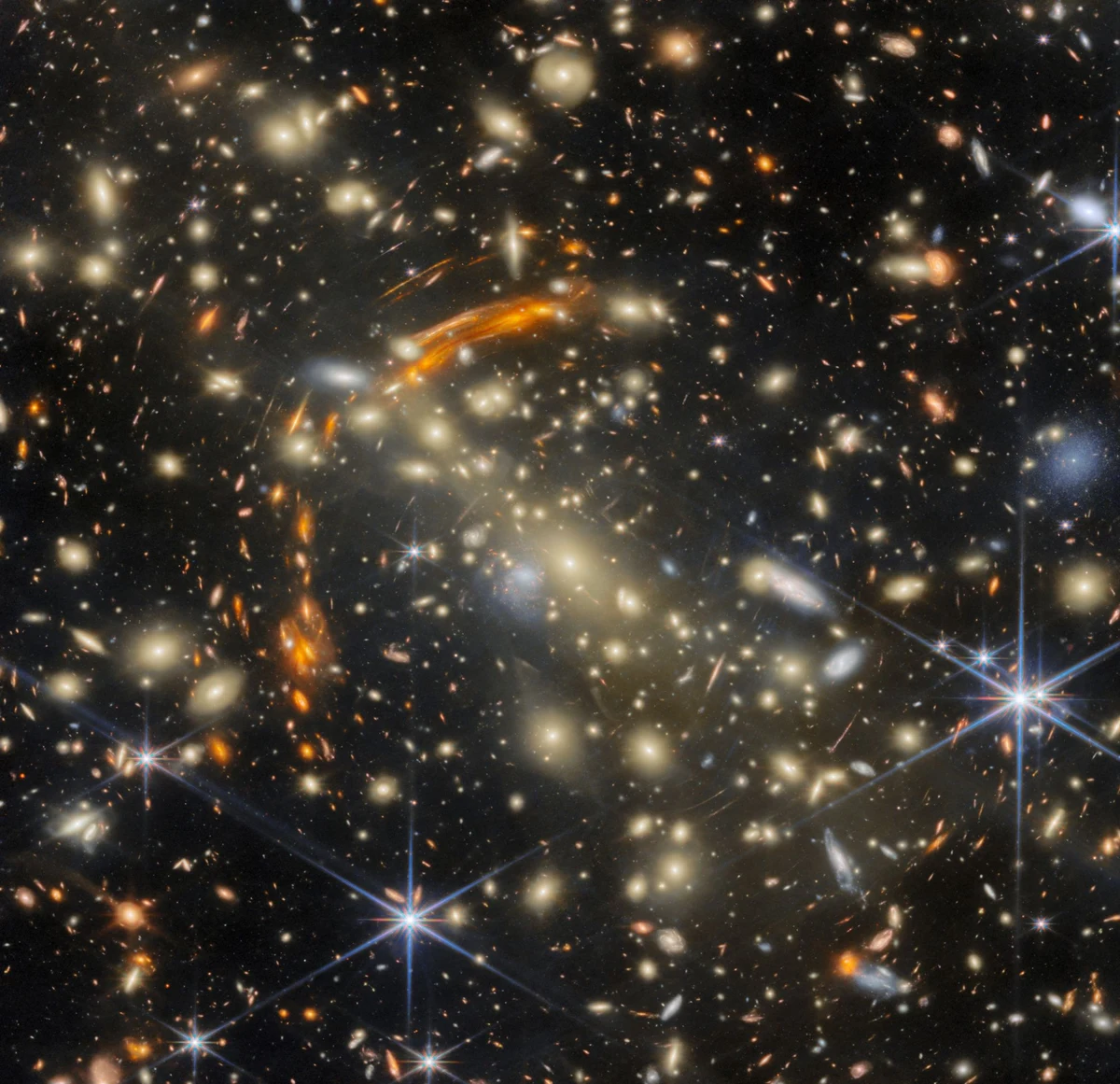
The earliest galaxies — and how the gravity of foreground clusters magnifies these faint, far-away sources into view.

Population IIIStrong lensingHigh redshift JWST / NIRCam

01 — Cosmic Dawn / high redshift

Finding the first galaxies

As the universe expands, a galaxy's light is stretched to longer wavelengths. Neutral hydrogen in the early universe absorbs everything blueward of Lyman-α, so a distant galaxy simply drops out of the bluer filters — the higher the redshift, the redder the band where it vanishes. This Lyman-break technique is how galaxies from the first few hundred million years of our universe are selected with JWST.

8.0
Age of universe
Lookback time
Lyman break
Dropout band

Flux blueward of (1+z)·1216 Å is absorbed by the intergalactic medium. Bands: JWST NIRCam wide filters. Ages from a flat ΛCDM cosmology.

02 — Lensed Candidates / the explorer

Detecting the first stars

This is how Population III candidates are hunted at z = 5.6–6.6 behind lensing clusters: from a faint dropout, to fitting its z = 6 spectral fingerprint (Pop III vs. galaxy templates), to undoing the cluster’s lensing to recover the true source, to its place in the source-plane density field. The candidate shown is fabricated for illustration.

step 1 / 4

Identify

UV slope β
Fit to data

Population III galaxies are expected to form from nearly pristine gas. The open question is whether unusually metal-poor, high-redshift candidates in JWST lensing fields show the photometric and environmental signatures expected from the first generations of stars.